





Book Review: John of John — Douglas Stuart

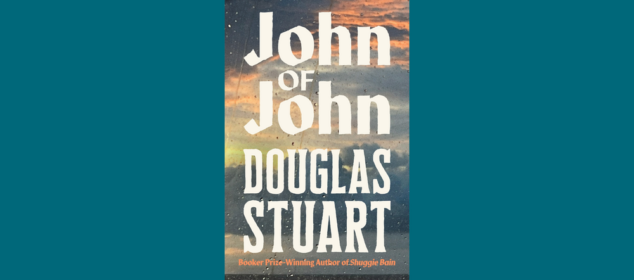
Stuart Douglas has written two excellent novels to date, but they were undeniably heavy. Shuggie Bain and Young Mungo, with their distinctive names, are not exactly laugh riots. Douglas’ third novel, John of John, continues the trend of being named for a character, but it has a slightly lighter spring in its step. Very serious matters happen between these pages, and yet our titular protagonist won’t let it get him down.

When John-Calum Macleod is informed that his grandmother is dying, he returns to his home island of Harris to help maintain the household with his taciturn and devout father, John. But grandmother Ella doesn’t seem to need Cal, and John only wants Cal to do exactly as he’s told. Discouraged by his lack of success on the mainland, Cal finds himself wondering if things will be any better for him on Harris or if his business is going to inevitably become everyone else’s once more and if what little liberation he has claimed for himself will have to be tamped back down. Despite their diametrically opposed beliefs and lifestyles, Cal and John might have more in common than either suspects.

Set in the late nineties, John of John is redolent with detail that could only be provided with someone intimately familiar with the Scottish textile industry of the time: the licensing involved in weaving, the specific “signature” that each loom bears, and the effort that it takes to survive on a depressed island. John of John is a very specific novel, and the way that Stuart crystallises his time and place is an essential part of its enjoyment.

John of John is Stuart’s first foray into a novel with multiple viewpoints, providing separate stories for both Johns. We are privy to knowledge about father and son that each hopes that the other will never find out; a split-level multigenerational gambit that pays off in ways that neither understands. John is a tyrant of a patriarch, but in a way that we’re able to comprehend and develop sympathy for, even as certain actions surely condemn him. At times, John seems more important than Cal, but that’s the beauty of John of John: each part is defined by the other.

Ella, the lynchpin of the family, and unwilling host of John, is as much if not more of an outcast as Cal. Her Glaswegian nature marks her as more Other than a boy born and raised on the island, no matter how different Cal might be. Surrounded by people who exclude her through use of the Gaelic tongue (which heads each chapter), Ella presents another aspect of grappling with identity in a hostile place when you’re From Away. This trinity forms the novel, but Stuart has many more elements to recommend the piece. 

The supporting cast embody the spirit of a small island in Scotland without stooping to caricature.  They populate the novel and bring it to life, preventing the Macleods or Ella from existing in an empty expanse. The MacInnes brothers could have been quaint parochial archetypes in the hands of another author, but here they provide the backbone to John’s story. The Macdonald clan, from promising Isla to the constantly thwarted Doll, similarly inform Cal’s own experience. Stuart has endowed all of these characters with a credibility that brings John of John to life. The book feels vital and lived in: a piece on the cusp of a new era for Scotland, for better and worse.

Though this is a novel more of person and place than plot, John of John is a “year in the life” type of novel, and time marches through it. Informed by the history of the place and its people, the changing perspectives of a father, son, and grandmother as they learn more of each other, it’s not about the event but the development. Things happen here, both within the characters and without. There’s a flow and a give and take, but it’s never strictly about what happens. The infinite tiny shifts that move us through our days bring these people to a conclusion that is not inevitable so much as it is understandable. No one is as they were at the beginning of John of John, and while they don’t escape unscathed, it’s fascinating to watch them get there.

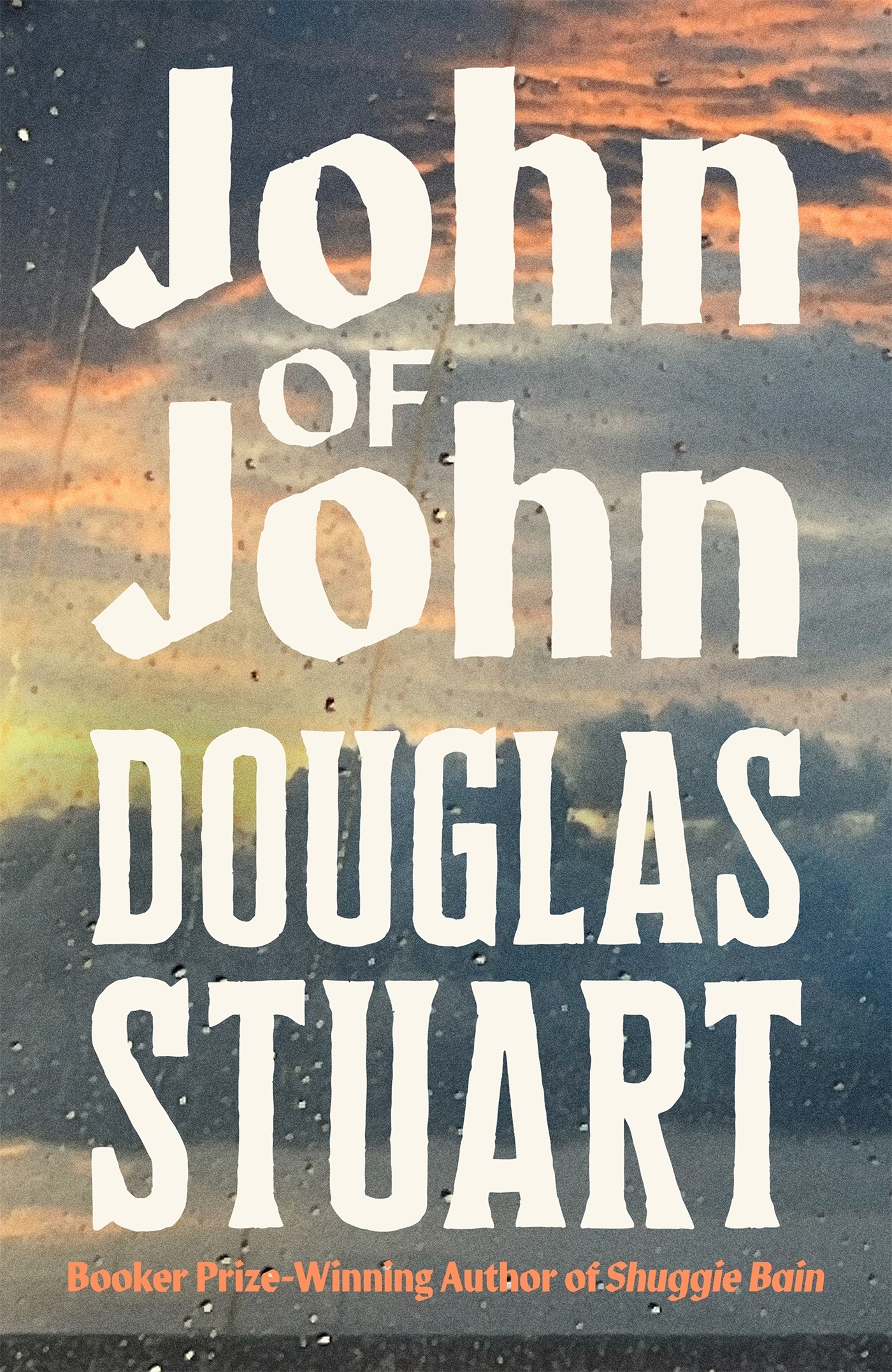
If it proves nothing else, John of John shows in short order that Douglas Stuart has not simply written the same book three times. The agency granted to these characters that was denied the others opens their worlds up, even as various strictures bring them down. This is a carefully constructed novel, right down to the cover: though it may be rain spattered, it depicts light emerging from beyond the clouds. Though undeniably wet, John of John allows the reader that most elusive of emotions granted by books: optimism. Stuart’s third novel is his most accomplished yet, and demands to be relished.

An Advanced Reader Copy was provided by Grove Press for review.

Book Review: The Drop — Michael Connelly

What happens when the loose cannon who gets results for stupid chiefs is used by a stupid chief to get a result? Harry Bosch, fresh off helping his half-brother with a prosecution case, is called in to investigate a suicide as a personal favour, and avoid politicking. At the same time, he’s also investigating a more than twenty-year-old cold case which turns up the DNA of someone who couldn’t have been the murderer because they were only a child at the time.

A lot happened to Bosch in the late 2000s and early 2010s, and he’s reeling from all of it. He has so much fall out to deal with that it’s a surprise Connelly doesn’t describe him as glowing in the dark. Dual case wielding is a net positive in this instance because it keeps him busy, and the cold case is less prosaic than the suicide. Both give him a chance to let down and be let down by his fresh partner David Chu, first introduced in Nine Dragons, whose continued presence was predicated by the abrupt ending of that adventure. Moreso than Maddie, Chu is utilised here to expose Bosch’s harsh exterior and soft underbelly. It’s a strong dynamic.

The Drop does, admittedly, descend into serial killer bombast, but Bosch attracts that sort of thing. The tightrope between the extreme and the mundane — the suicide investigation is resolved by solid, if muddy, police work — is handled well, and even allows Bosch to pursue a new love interest, and one that’s not wholly inappropriate this time.

Yet the moral ambiguity of The Drop is slightly too ambiguous: it’s realistic that Bosch is an idealisation of what a police officer can achieve (albeit one who breaks way too many rules to trust in real life), but are we expected to believe that he would feel bad about preventing a murder, even of one of the foulest villains he’s ever encountered? And just how much of the cold case investigation was fed to him? Can Bosch trust Michael Connelly anymore? No, these books aren’t that meta.

If you’ve managed to read 24 Michael Connelly novels, 15 of which were pure Bosch (and a very good argument could be made that The Reversal was a Bosch novel), you know whether you like the man. If you like Bosch, The Drop is some good Bosch.

Book Review: The Ministry of Time — Kaliane Bradley

In the literary world, hyper fixations and stories written to entertain your friends can be noble pursuits: famously, Frankenstein and The Vampyre, the source of much modern literary vampire mythology,  both sprang from the same friendly competition in a winter of discontent. The Ministry of Time, born of 2020 isolation and  a fixation on The Terror, is no Frankenstein, but it reads exactly as if it was written for Kaliane Bradley’s friends. 

Whether it succeeds is partly up to how likely you would consider yourself Bradley’s friend, and partly up to how game you are to read fan fiction about a real historical figure that the author is clearly exceptionally horny for. The Ministry of Time drips with lust at the expense of intrigue, so how you take it really depends on which book you want to read.

In the near future, time travel has been discovered and is run out of a facility in London by the newly created Ministry of Time. Our unnamed narrator, the daughter of a Cambodian refugee, is brought on by the Ministry to help acclimatise one of several “expats”, people plucked from time on the grounds that they were going to to die anyway, to the modern era. The narrator is assigned Commander Graham Gore, late of the Erebus and the Franklin expedition, and she is immediately smitten by him. There’s some light intrigue in the background — is there a mole in the Ministry? who is this Brigadier who keeps showing up and asking probing questions? — but much of that is subsumed by the narrator’s unbridled lust.

The normal things that you’d expect in a time traveling fish out of water story are present in The Ministry of Time: Gore is fascinated by modern technology, disapproves of cinema, and is handsome in a way that the men of the 21st century are simply incapable – albeit shorter. His closest displaced companions are more interested in other aspects of the time, like the freedom to be homosexual and not die of the plague (admittedly, two major perks if you’re both inclined that way and don’t want to die). Other expats are less capable of being cured of their bigotries or, quite simply, are not as interesting to Bradley.

Towards the end, far too late to count as a real third act, Bradley starts suggesting that the vague intrigue that has been sprinkled lightly throughout might be leading somewhere. And it does, but in a way that has been really underdeveloped all throughout. The narrator is fundamentally uncurious about the Ministry and what they do because she is so unbearably besotted that nothing matters to her beyond Gore. Realistically the narrator should be on permanently high alert because her position is unprecedented and there’s much to learn and there’s the occasional political assassination. But she’s not. She doesn’t care at all, and so the reader is barely exposed to the actual nuts and bolts of this profession except to learn that Gore is as good at the job that he gives himself as the narrator is bad at her own. Often The Ministry of Time feels like reading the story of a janitor at MI6, except the janitor doesn’t show up to work most days and when they do they spend most of it cataloguing and analysing micro-aggresions in minute detail, not noticing that a covert nuclear war is being waged and countered in the foreground.

Given that this book is written as a retrospective letter to an unknown recipient, when you read about those micro-aggressions they’re couched in terms of “I should have answered this way” or “that was the moment it all went wrong for me.” The narrator only really worries about how she talks to her female colleagues, and that’s almost exclusively through the prism of race. This is when The Ministry of Time swings towards the didactic and it does not do either of its recipients, co-worker Simellia and big boss Adela, any favours. If anything it hardens the audience against them even as the narrator expresses her regret, and it perhaps says more about professional gender politics than may have been intended.

Beyond this, apart from writing the book as a bodice ripper with limited bodices for the ripping, Bradley has a tendency towards the memeish in her writing. If you paraphrase the “normal to want and possible to achieve” tweet in your text without comment, it feels like a failure of the imagination. Yet the end matter of this edition suggests that The Ministry of Time is funny. Humour, like time itself, is subjective. The standard issue fish out of water stuff combined with a minor case of online poisoning works against this book’s favour.

Yet for its many flaws, The Ministry of Time wants to be a good book; it just wants the reader to do more work than it has done itself. For all the tweeness, Gore, Arthur and Maggie are somewhat charming and it’s quite possible to care for them. The narrator is nothing if not accommodating, and acknowledges her tunnel vision. There’s a deep mechanics of time travel that is, again, only superficially touched on, and no real room or call for a sequel. The intrigue, though half-baked by the time it emerges, is genuinely intriguing, there’s just not enough of a breadcrumb trail and the nature of the loop is nearly entirely unexplored. It’s actually bizarre how much the narrator does not care and where her priorities lie, because Bradley really could have had it both ways – particularly if someone who had used the internet had edited it before thrusting it upon an unsuspecting, although remarkably receptive, public. The strengths of The Ministry of Time are not as multifarious as its flaws, but they do elevate it into something somewhat worth reading.

If the imbalance of The Ministry of Time does not bother you – if you’re fine with something that is structured as largely slice-of-life material with a smattering of drama towards the end – then it can be quite successful. A romance-forward time travel novel can still be quite weighty thematically, but The Ministry of Time comes across as gossamer thin. Almost all of the thought-provocation that goes with its tripartite elements — time travel, intrigue, romance — is left off the page until almost the last second. With no time to breathe or grow, we’re left with what little we’re given. This won awards and presumably made Bradley’s friends very happy in a cold and dark time. Maybe that’s enough.

THE MINISTRY OF TIME | By Kaliane Bradley | Hachette Australia | 368 Pages

Book Review: How To Kill a Guy in Ten Dates — Shailee Thompson

There are a fair few Australian authors kicking around in genre spaces these days, and the question is always: are they going to set their books in Australia (Jane Harper), their author’s native land like Ireland (Dervla McTiernan & Adrian McKinty), a remote island that doesn’t exist somewhere off Scotland (Laura McCluskey) or … America (Dervla McTiernan & Adrian McKinty)? Brisbane-based Shailee Thompson has decided to go for the United States approach, which is the most logical choice for her combination of those two complementary genres, the rom-com and the slasher film. It really helps to know what you’re in for with How To Kill A Guy in Ten Dates, lest you be surprised that the blood starts spurting at 12%.

Jamie Prescott is writing a dissertation on the intersection between rom-coms and slasher films, and her roommate, Laurie, is an acolyte of documentaries. Having given up on dating apps, Laurie and Jamie go to monthly singles events. On the night that they go to a speed dating event at a labyrinthine club that they attended in their misspent youth (ie five years ago), things go wrong when the lights go out and Jamie’s date’s throat is slit. After that it’s a race for the survivors, shorn of their phones and locked in, to survive the night. But could Jamie maybe find true love on the way, even as the bodies pile up around her?

It feels like at some point over the years it became harder to find a slasher that isn’t self-aware than one that is. This may be even truer of novels, which are not only not films, but often have a stream of consciousness first person narration which means that the lead character can make their commentary on the situation without having to shoehorn it in to dialogue. The book opens with a list of rules for how to survive a slasher, and Jamie refers to them throughout, if only so that other characters can scoff at her.

The problem with having such rigid rules in place is that Thompson is in trouble every time she tries to break one. If you’re even vaguely “up” on the genre then you’ll probably realise a couple of things that Jamie either ignores or discounts, and some of the narrative twists are easily discernible well in advance of their reveals. And then Laurie can say “oh, of course! Just like in [x movie which made hundreds of millions in the nineties, which I have definitely referenced textually]. Why didn’t I see it sooner?” Of course the reader is in a better position to think clearly than Laurie is, but the thing is that Laurie is in a confined space and seems to have a lot of time to think throughout the night — like the multiple instances where she spends ten minutes hiding in silence.

Thompson makes a couple of other uneasy concessions to her second genre, the modern romance novel feeling required to have sexual content no matter how awkwardly inserted it is, so to speak. In one of the moments of quiet contemplation, there is a sexual encounter that is mercifully brief but also you’d have to be there to understand how it’s a sensible thing to do at that juncture (you would also, correctly, guess that this is against Laurie’s rules). It’s not gratuitous, and if you have to do that in this situation, it’s handled sensibly enough. Yet that button didn’t necessarily need to be pressed; sometimes writing within genre is about confounding expectations rather than meeting them.

However, Thompson is right: there are overlaps between Laurie’s genres of choice. It’s not like no one has contemplated the relationship between sex and violence before. Without actors to anchor the ensemble cast to a place and time, it’s difficult to ascribe any characteristics to most of them before they die; Thompson compounds the matter by having separate characters named Drew and Stu, and Laurie frequently accidentally calls Stu by Drew’s name — a problem that doesn’t really resolve itself even after Laurie discovers Drew’s corpse — and the other women beyond Jamie are described as mostly nice except for the very standoffish one (maybe she will become narratively significant?). 

The vagueness continues to the club itself, which has a helpful map provided at the front of the book. Apart from it being clearly not up to fire safety code, it’s difficult to get a sense of what its labyrinthine interior is really like. The map doesn’t illuminate much, and it doesn’t seem like there’d be much room to hide from a knife and cleaver wielding maniac in its halls. Yet the ability of a venue to expand and contract as the story demands is thematically appropriate. If ever a scenario crumbles in the face of cold logic, a slasher is the perfect model. No matter the metatextual levels at play, slashers have to respect at least some rules, and here Thompson has made a wise choice.

How to Kill a Guy in Ten Dates is like a slasher itself: some ideas are executed and others escape the page without proper implementation. It’s a better concept than it is an actual novel, but the idea should at least have a market, and Thompson can likely be trusted to write another. 

HOW TO KILL A GUY IN TEN DATES | By Shailene Thompson | Atria Australia | 368 Pages

An ARC was provided by Simon & Schuster (Australia) through Netgalley in exchange for review.

Book Review: I Think We’ve Been Here Before — Suzy Krause

The whole world is astroturfed, we know this much. It’s how I Think We’ve Been Here Before ended up in my lap, probably – it’s published by Lake Union Press, which is owned by Amazon, and it was promoted as one of the Goodreads books of the year despite being published in December 2024. Without the need to feed the gamification ending that is modern Goodreads, many readers likely would not have even thought to try I Think We’ve Been Here Before. It’s very low key, but it’s also entirely divorced from human nature in a way that never rings true, despite the elevated concept.

In October, news reports announce that an astronomical event will see the world destroyed by Christmas time. A family in a small Canadian town are in peril: the patriarch is inured to the concept because he has a terminal illness anyway; the matriarch can’t reach her daughter in Berlin; the daughter, unable to book a flight home, refuses to answer her phone. All the while, they have an intense feeling of deja vu, but surely the world hasn’t ended before.

Krause has two huge deal breakers that make the book near impossible to take: Nora’s inability to answer her mother’s calls for two weeks discounts most sympathies the reader is able to have; a twelve year old disappears without trace for three weeks and his parents only marginally freak out. If this was a non-apocalyptic book they’d be apoplectic; that global doom is imminent means you think they would be more desperate for the reunion.

Nobody says that people need to face the end of the world in panic; there’s a lot to recommend taking it in your stride, but who’s to says how any of us would tackle the inevitable? But Krause has preserved her characters in a sort of amber sludge where they don’t care about anything, particularly. It’s not nihilism, but an indifference that is neither credible nor distressing. Krause’s touch is so gentle that for the most part you can only feel either contempt or disdain towards.

It’s one thing for the people of a small Canadian town where nothing ever happens to be this way (if anything, they should care more), and another for the streets of Berlin that are portrayed as if they have almost no one in them, without ever explaining where anyone has gone.

This said, I can be a sucker for ends of the world when an author is brave enough to commit to them. I Think We’ve Been Here Before does, in fact, have an ending that is both stronger than anything that came before it while still feeling like it was informed by what came before it. It’s not enough, but it’s a valiant effort on Krause’s part.

I Think We’ve Been Here Before has the kernel of an interesting idea hiding in it, but Krause never really allows it to germinate, and it has an artificial air that is so intoxicating to people who enjoy reading books where the characters aren’t easily mistaken for humans. The word “cozy” has been bandied about to describe this sort of fuzzy hug of a book divorced from reality, but readers would do well remember that coziness can be suffocating. There’s no breathing room in this novel, but at the very least it thematically hits the mark for an end of year read.

Free yourself from the chains of Goodreads challenges.

Book Review: The Impossible Fortune — Richard Osman

The first Thursday Murder Club novel released since the premiere of the star-studded, anodyne treacle of Chris Columbus’ movie is perfect middle of the road Osman. It’s going to sell millions and that’s all that matters, as the series has ossified into singsong koans about senior citizens who talk like children but hold secret depths. It’s not quite that extreme, but sometimes it feels like it. 

The best man at a wedding tells Elizabeth that someone is out to kill him. Emerging from the rut of her grief, Elizabeth’s interest is piqued, and piques further when, the day afterwards, the best man disappears. The Thursday Murder Club bands together to figure out, with the help of their increasingly wide network of criminal accomplices, precisely what the best man knew, while also taking turns babysitting Ron’s grandson, Kendrick.

It’s all perfectly serviceable, not infrequently affecting, and often funny. But The Impossible Fortune isn’t particularly well structured: Joanna becomes a major character, which is fine, while the police are largely sidelined. Osman has become almost more enamoured with his various crims — even the freshly introduced ones — than with his established oldies. 

The character work doesn’t make up for the story, which Osman doesn’t weave together or really get off the ground. There’s dynamism to the Ron B plot (which is really the A plot) but, rather like the smug utility of AI in 2024’s We Solve Murders, the titular impossible fortune is a lame duck that is too trendy for its own good. By the end it’s not even clear if it’s really strong enough to be considered a MacGuffin.

And the character work isn’t always Everyone seems particularly bumbly, and not in a way that seems to be a cunning ruse. It often beggars belief; towards the end Joyce is unable to locate the pause button on her remote control, which Joanna informs her is the “button with two parallel lines on it.” Joyce is an eighty year old woman in 2025 with no evidence of cognitive decline (we’ve already done four books of that), the pause button was invented in Sweden in the 1960s, and there is no way, in between tapes, cassettes, videos, CDs, DVDs, and all of human history, that Joyce has not encountered it for a full three quarters of her life. If you’re going to pick a “old people don’t understand remotes” joke, don’t use a universal symbol, Osman. You are smarter than this and so are your readers.

There are also parts in here about the characters growing more frail as they age, but it still feels that Osman isn’t yet strong enough to face the concept. The groundwork is laid, but only barely. It feels like Osman is trying hard not to advance his characters too far (he is going to live longer than they can, realistically), so this is far more timid than his usual work — and one of the solutions is risible.

The Impossible Fortune is going to make a lot of people happy, and that’s fine. But we know that Richard Osman can do more than fine, even if the tone is more often than not “aw shucks” amused and the characters’ moral codes are divorced from the petty morality of the real world. This one doesn’t amount to much and, due to his publishing schedule, it will be 2027 before you see these old folks again. If it tides people over, that’s good, but readers deserve more than a faint smile. There’s no blood in this water.

And let’s face it: the movie was wrong.

Movie Review: Jurassic Park Rebirth

Thirty two years. Three Jurassic Park movies. Now four Jurassic World movies. Seven movies about the inadvisability of bringing dinosaurs back, and no lessons have been learned. Diegetically, we’re still playing God; creatively, we’re taking massive expensive steps backwards towards meaninglessness.

Read more: Movie Review: Jurassic Park Rebirth

After humanity brokered an uneasy peace with dinosaurs in Jurassic World: Dominion, the terrible lizards have started reacting to the Earth’s changing climate and have largely died out except for those who live on a series of islands around the equator. Mercenary Zora Bennett (Scarlett Johansson, The Phoenician Scheme) is hired by pharmaceutical executive Martin Krebs (Rupert Friend, The Phoenician Scheme) to escort dinosaur expert Dr. Henry Loomis (Jonathan Bailey, Wicked) to the forbidden quarters of the planet to harvest the blood of the largest dinosaurs of the ocean, land, and sky to create a cure for heart disease. Once their boat runs aground on the island that InGen used to genetically engineer new and exciting hybrid dinosaurs, they have a 48 hour window to get the data they need and escape with their lives. 

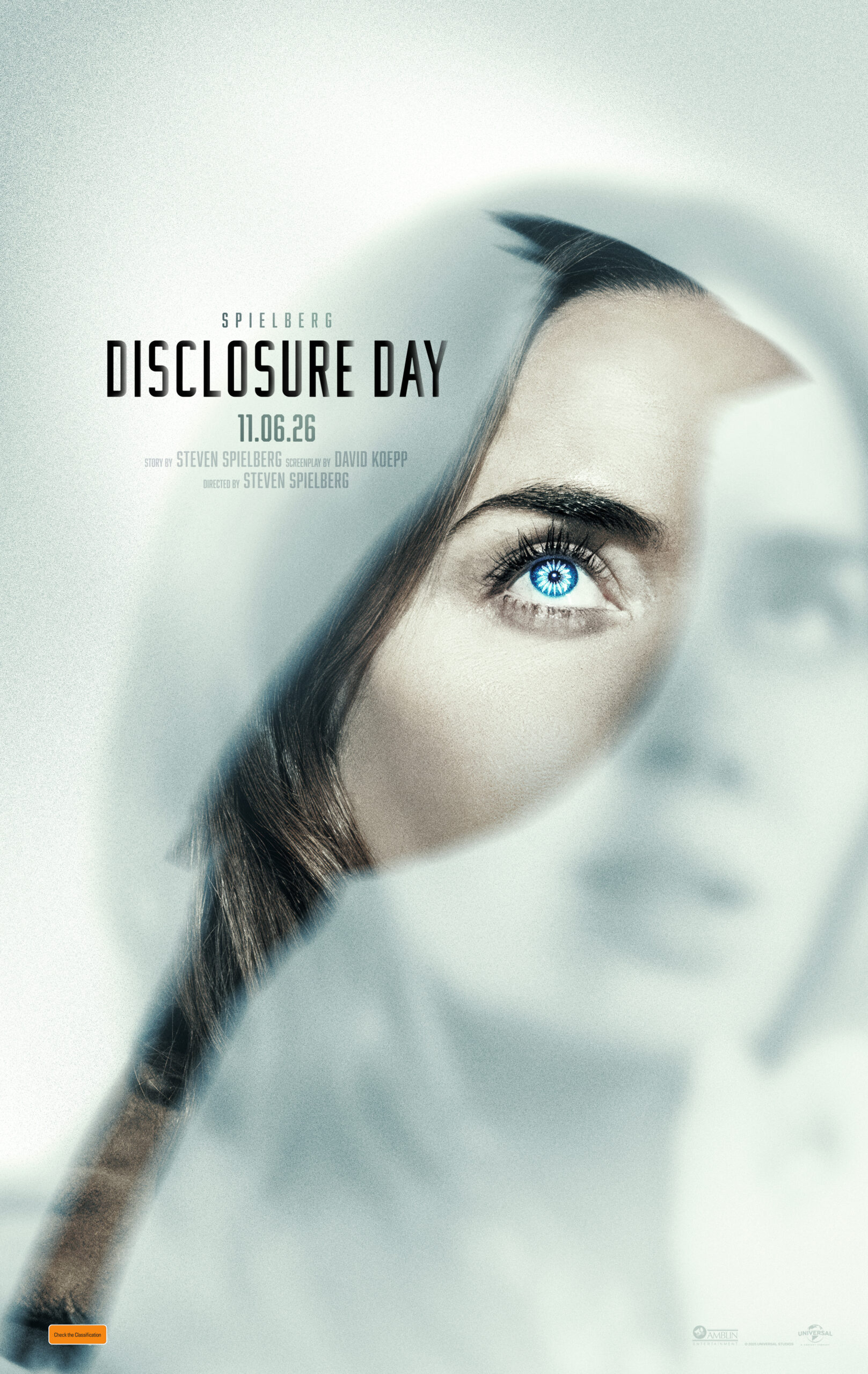
David Koepp (Black Bag), writer of the original film, has returned to the franchise for the first time since The Lost World to provide gravitas to a concept that, like the newly winged velociraptors contained herein, should never have got off the ground. Koepp knows how a script works, but the state of modern franchising is such that it feels like a collection of pieces that are haphazardly assembled into a 134 minute work. The twist is that Johansson plays the traditionally male role and Bailey plays the role that would normally given to a woman, and that’s as far as that goes. There’s a vague attempt at a maybe romantic spark between them, but the fact is that Johansson is near permanently stuck in a droll register and Bailey has infinitely more chemistry with Mahershala Ali (Leave the World Behind), one of the other mercenaries on the trip. 

There’s a family of three and a stoner boyfriend who get thrown in as the B plot, so director Gareth Edwards (The Creator) can periodically cut away from Bennett’s team to show something else. They don’t add much humanity to the movie beyond giving Ali a motivation related to the one non-expository scene he is afforded with Johansson, but they do get an action highlight in a t-rex scene cut from the original Jurassic Park. Every element of this movie is a tool, but none of them are used effectively.

Jurassic World: Rebirth has such a small ensemble that it doesn’t have enough characters to spare to be unceremoniously eaten, or rended in twain, or dropped from a great height. You get a quick feeling for which characters have been marked “safe” by Koepp, because while we’re unable to feel any tenderness towards them, we know that he wouldn’t dare kill them. The few deaths the audience are treated to satisfy in none of the essential ways: they’re too tame to entertain, and the characters are so thin that you don’t care if they get swallowed.

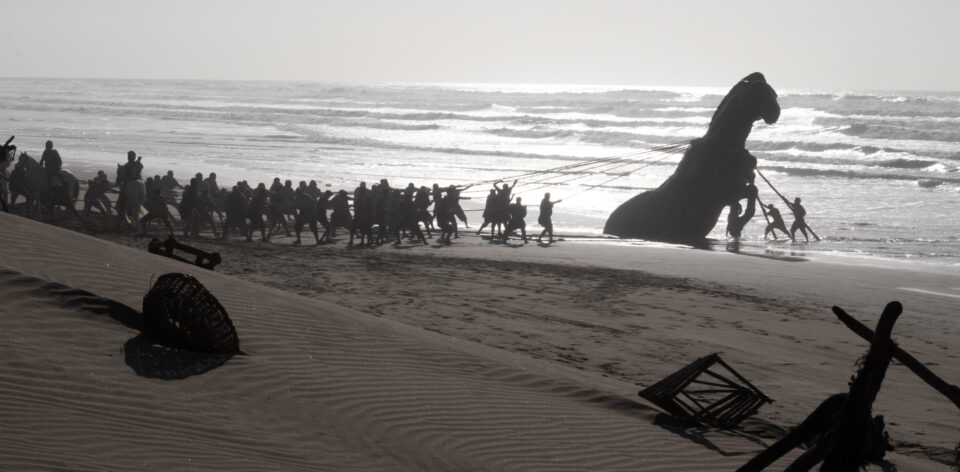
It’s not franchise fatigue speaking to say that the new dinosaurs are ugly and poorly integrated; the distortus rex is a bizarre cross between a t-rex, a beluga whale, and a xenomorph, and it is more weird than scary. It is shrouded in shadow, not so much to create atmosphere as to obscure the gaps in the design. Worse than that, the equivalent to Jurassic Park’s brontosaurus scene, despite Jonathan Bailey’s clarinet solo on the score, falls so flat that you feel like you’re no longer capable of feeling wonder at creation. 

There is one moment of unambiguously interesting production design, and that is in the raid on the quetzalcoatlus nest, set in an arena that none of the characters can explain. In a movie that is hellbent on providing answers to questions that no one would think to ask, this one moment of mystery is allowed to sit. The questions that you will see answered include: why does this abandoned dinosaur island have a commercial gas station on it? And the answer is that the movie hasn’t had any new product placement since the party left the boat, and they need to show all of the branding that they can to subsidise the $180 million budget.

Director Gareth Edwards (The Creator), no stranger to creature features, does little to differentiate this movie from any other set on a remote island where death lurks around every corner. There are multiple King Kong films that do it better. There are multiple Jurassic movies that do it better, for that matter but, like the abominable distortus rex that powers the climax of this movie, Jurassic World: Rebirth is composed of the junk DNA harvested from far more impressive blockbusters. Despite its big name actress star and Oscar winner in support, it is potentially the most anonymous Jurassic film to date. By the time we reach the final cascade of events that are basically James Cameron’s Aliens, it barely even resembles a Jurassic film at all.

Jurassic World: Rebirth is a movie that damns the world for losing interest in dinosaurs, a notion as ridiculous as closing the zoos of the world because no one cares about animals anymore. With its vague environmental and universal healthcare messaging, Jurassic World: Rebirth is about as right on as a movie can get without actually caring about anything that it has to say. It may be ironic to complain that there’s nothing new in a movie about creatures that have been dead for 65 million years, but there’s nothing here you haven’t seen before and better.

Jurassic World Rebirth opened in Australian cinemas on July 3, 2026

Directed by: Gareth Edwards

Starring: Scarlett Johansson, Mahershala Ali, Jonathan Bailey, Rupert Friend, Manuel Garcia-Rulfo, Ed Skrein

Book Review: The Wolf Tree — Laura McCluskey

The Australian crime boom continues apace, but not everyone is happy to keep their crime restricted to regional Australia or the big cities. Some, like Dervla McTiernan or Adrian McKinty, expats who found themselves on the island’s shores, became hooked on writing about their Irish homeland before branching out to America with mixed success.

Laura McCluskey has done something slightly different: she’s Melbourne (or Naarm) based and presumably Australian born, but she has Scottish grandparents. The Wolf Tree, her debut novel, is set on a remote island off the Scottish coast. It bears the lack of specificity that you can get away with from such a setting, and it promises the sort of insularity you get when everyone knows everyone else and there’s only one way off … or two, if you count the reason the police are there in the first place.

Months after sustaining a catastrophic injury on the job, George Lennox is trying to get back into police business. She and her partner, Richie Stewart, are eased back into it by investigating the seemingly open and shut suicide of an eighteen year old on the island of Eilean Eadar. The locals, under the thumb of the priest Father Ross, are not keen to talk, and while George battles her own demons she starts to almost believe the island is haunted by wolves. If George can last five days on the island and rule the death a suicide, perhaps she can make it out alive.

Crime novels often come down to the strength of their lead characters, and George Lennox is not the most sympathetic person. Eilean Eadar is the sort of place that has its own authority, which means that you have to come at it from a soft power angle; unsurprisingly, George has none of that to offer. She is a blunt instrument that isn’t even tempered with a preternatural talent for policing, with a primary talent for baseline rudeness.

The strongest element of George comes from without, in the form of her foil. Richie’s levelheaded veteran officer who does a special line in not being mad, but disappointed, doesn’t break any new ground, but he’s a nice contrast whose solidity helps to make The Wolf Tree not entirely by the numbers.

Partially inspired by the Flannan Isles Lighthouse mystery of 1900, the wisest choice in the construction of this book is that it sticks to a single timeline. Not for these readers alternating chapters 125 years apart, but rather flavour and texture that give a homeopathic tinge of history to the proceedings. It only sort of ties in to the book as a whole — one character keeps asking George “have you read the lighthouse keepers’ logs yet?” — but it informs it never the less.

Eilean Eidar is a more interesting locale than McCluskey strictly gives it credit for, and George’s bluntness acts as a smokescreen for their insularity. McCluskey briefly touches on the idea that children can be sinister, but doesn’t take it very far. She is more interested in the concept that people who reject the other have in fact othered themselves; this late revelation that George possesses an empathy that many of the citizens of Eilean Eadar are incapable of are really what seals the fate of the book, and prevents it from the delicate tipping point of policing as an act of colonisation.

Obviously it was never going to be a clearcut case of suicide (it is only on the odd occasion that you get the double blind of an open and shut case actually being open and shut despite the investigators’ attempts to convolute it), but quite how far McCluskey chooses to take it is something to boggle at.

There has to be a degree of suspension of disbelief at play here, because the outcome will have you wondering how the police could ever hope to prosecute any of it. Even if you’re not in law enforcement, you’d be glad this case isn’t yours.

The Wolf Tree is a confident, if semi-anonymous, debut novel. George Lennox is interchangeable with many other tortured detectives, with the added bonus of a mentor that she intermittently chooses to listen to. Despite the scale of the conclusion, the book isn’t neat. It is unclear whether George can return — although it would be pretty funny if she got assigned a new beat investigating murders on a series of lonely islands — but if she does, there’s enough here to bring readers back.

The Wolf Tree released in the US on February 11, 2025, and is set for release in Australia on February 28, 2025.

An ARC of The Wolf Tree was provided by HarperCollins Publishers Australia in exchange for review.

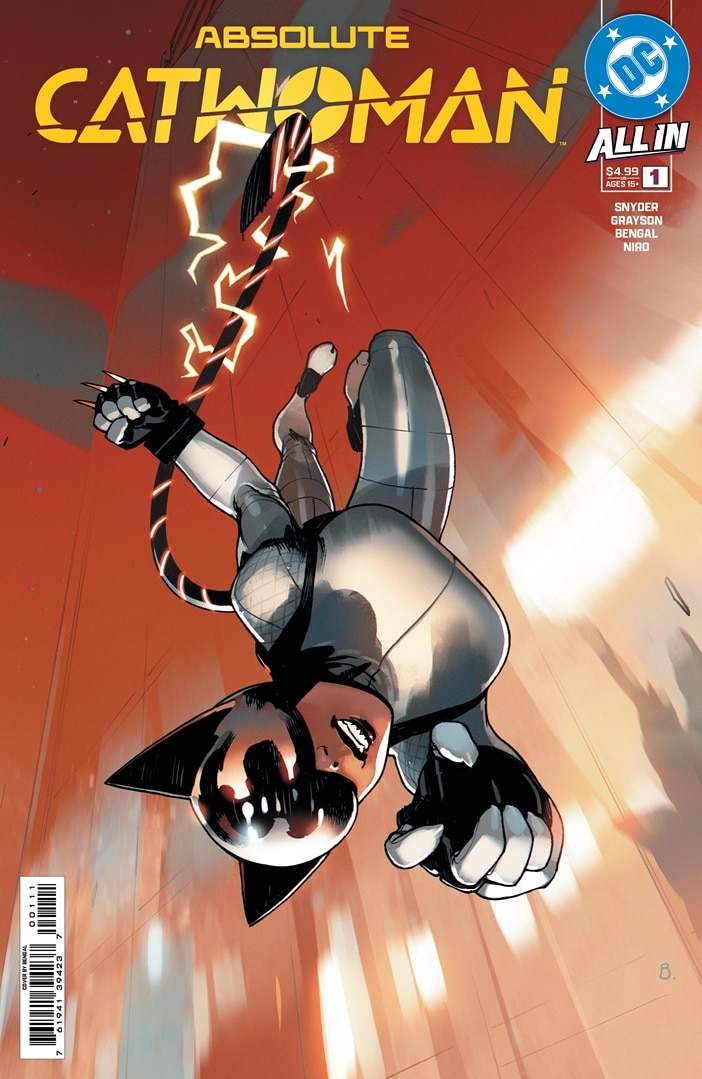
Comic Review: Catwoman: When in Rome — Jeph Loeb & Tim Sale

At long last, the final piece of The Long Halloween puzzle – until The Last Halloween debuted towards the end of last year. But that’s still ongoing, so we’ll put it aside. Initially intended to be published shortly after Dark Victory, Catwoman: When in Rome was delayed for four years; Hush, a very different flavour of Jeph Loeb,was published in the interim.  

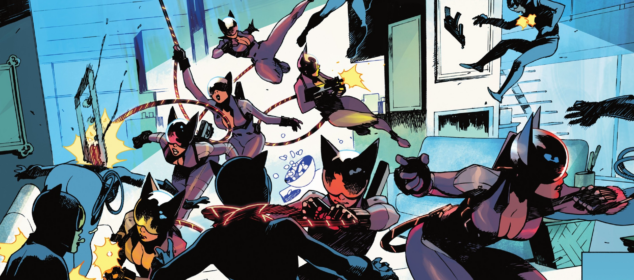
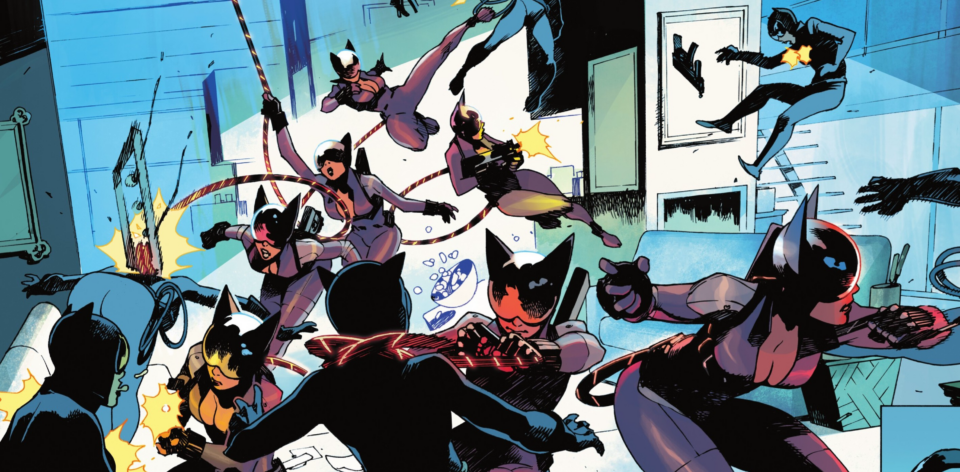
This six issue rundetails what Selina Kyle was up to while Batman was investigating the Hangman in Dark Victory, a story which Selina only features at the start and end of. Realistically it’s an excuse for Tim Sale to illustrate Selina in a series of high fashion pieces – for the covers, at least. She spends a lot of the inner contents either naked or close enough to it. Combine this with an overtly lecherous Leprechaun-like Edward Nigma, and you’ve got a DC title custom-built for perverts. Sale’s art is excellent as always — and different to his previous titles, as always — but after a while the attention to detail is notable.

Frustrated with Bruce Wayne’s distant nature, Selina Kyle takes herself to Rome to investigate the Falcone crime family, which she suspects she has deeper links to than simply an easy target for funding her lifestyle. Plagued by vivid nightmares, thwarted by overly familiar enemies, and abetted by Edward Nigma in heat, Selina has to hope that she not only solves her mystery, but survives her European sojourn.

Loeb doesn’t have access to the full Bat rogue’s gallery that he loves so dearly, because he was using most of them extensively in Gotham at the time this is set. Still, he makes an effort: he borrows Cheetah from Wonder Woman, and various weaponry crosses Selina’s path in ways that she’d rather it didn’t. Thanks to the miracles of modern villain science, Sale’s gloriously tetanoid Joker gets to make a guest appearance.

Due to the holiday nature of When in Rome, Loeb doesn’t tangle it near so much as he did the other Long Halloweens or the famously twisted Hush (for which Loeb has admitted that one key element came out of nowhere). The solution to this one, such as it is, is less surprising than it is inevitable. It’s a pleasant diversion from the dramas in Gotham, a sun drenched adventure for Selina and all that entails.

Loeb and Sale were a formidable team, rarely using the same aesthetic twice – while Long Halloween and Dark Victory were of a kind, they look quite different to Haunted Knight, which is the platonic ideal of Batman art (to this reader, at least), and the luscious Italian vistas offered by When In Rome. The Riddler is some sort of grotesque, but everything else is beautiful. Selina has a lot of skin, and a lot of butt, but it’s gratuitous in a completely different way to Jim Lee’s take on the character in Hush.

That’s why it’s so weird to end When in Rome with an epilogue taken directly from Dark Victory, with no changes to the art – Sale was in a different mode.

The more comics you read – pretending to an unearned expertise here – the more you realise that they’re not all momentous events. Catwoman: When In Rome has no sense of immediacy to it because it really does play like its title: it’s a holiday from more serious stories, despite a relatively high body count. Loeb has written Selina as a credible protagonist, and Sale has lavished her with an intense amount of attention to detail. It all adds up to complete the character arc that was alluded to throughout the Long Halloween series and, while not a towering achievement, it’s certainly a satisfying one.

Book Review: You and Me on Vacation (AKA People We Meet on Vacation) — Emily Henry

I enjoyed Beach Read, and Emily Henry is one of the big publishing sensations of the last five years. I’d put off You and Me on Vacation (known outside Australia and the UK as “People We Meet on Vacation“) because I found that I’d bought it in an Audible sale years ago, and the time allocated to an audiobook lives in a different compartment to that of a print or Kindle book, mentally. 

Unfortunately, it seems that You and Me on Vacation could have been put off forever, because I did not enjoy it at all. The epigraph reads “I wrote the last one mostly for me. This one’s for you.” As a result, Henry has written a book she doesn’t want and I don’t either.

For twelve years, Poppy Wright and Alex Nilsen have been the best of friends. Every year, they would go somewhere for a summer vacation, until two years ago, in Croatia, something happened that saw them cut off almost all contact. Now at a loose end writing for her travel magazine, Poppy wants to rediscover her joie de vivre, and reconnects with Alex to invite him away for a week in Palm Springs, culminating in his brother’s wedding. The only problem is she’s pretending that it’s a work assignment, and she’s bankrolling the whole thing herself.

Told in the present day, but interspersed with historical accounts of Poppy and Alex’s trips (related as if they were just happening, rather than Poppy being retrospective), You and Me on Vacation tracks their relationship from its inauspicious beginnings to its catastrophic collapse, into its inevitable future.

Love does not bloom between the pages (or the ears) of You and Me on Vacation: it is always there. There is no slow build up to Poppy developing feelings for Alex, despite what her narration tells you. This isn’t love at first sight, but it’s so close to it that you know you’re reading about twelve wasted years. It does not take her long at all to want to spend her life with him even if she’ll never admit it until the reader’s patience has worn gossamer thin.

Henry here subscribes to the romance novel theory that if there’s any problems in a relationship, it’s the fault of one person alone, and the other is a perfect angel. Poppy blames herself for everything that goes wrong, despite the fact that Alex Nilsen is a stuck up prig. He is presumptuous, he always assumes the worst and, despite having Poppy as a confidante, he never tells her the actual important things. This failure to communicate on both of their parts is a genre hallmark, but it is always treated as if it is Poppy failing to pick up on cues. No. Alex is rude. Alex has no social skills. Poppy claims that there’s a “Naked Alex” that only she sees and understands. And he’s a jerk.

Don’t get it wrong: Poppy sucks too. Big time. You and Me on Vacation is performed by legendary audiobook reader Julia Whelan, who has done many, many books, but one in particular for the purposes of this review: Gone Girl. Poppy comes across like the Cool Girl that Amy talks about in that novel, and she sounds exactly like the most disingenuous person you’re ever likely to come across. This is a charmless woman who acts ridiculously entitled without realising that her playful teasing is actually more akin to bullying. She’s not nice to be around. 

There’s also a secret thread that makes you hope that Emily Henry doesn’t identify too much with her protagonist: Alex is fastidious about cleanliness, but Poppy doesn’t “enjoy showering … I’m a three-shower-a-week person to Alex’s one to two showers a day.” It’s an incredibly weird statement to put three quarters into your romance novel, and there’s no suggestion that Poppy, with her active lifestyle, is bathing on her off-shower days. You have to sit with this knowledge for the end-run of the book, and suddenly you don’t trust Poppy on anything any more. There is a theory that is not allowed to be spoken aloud – and if it had any ballast, it would have made for a far more interesting book. Possibly written by Helen Hoang.

In her afterword, Henry talks about When Harry Met Sally, and its influence on this book. Maybe if You and Me on Vacation had a deli scene, it would be good. Henry says “[Nora] Ephron … left this indelible mark on me, planted a seed of ardent appreciation for characters who grate and irritate and infuriate, until the moment they suddenly don’t.” Alex and Poppy never don’t grate.

Sometimes a book’s title is tweaked internationally for very basic reasons and it either makes logical sense or it’s a huge impact to the interpretation of a book. People We Meet On Vacation is a title that only makes sense when Phoebe makes her giant speech towards the end, the traditional grand gesture, and there is absolutely nothing in the book to back up her grand thesis that boils down to three people from two separate vacations. It’s a terrible mission statement that doesn’t hold up in the text at all.

You and Me on Vacation is a far cry from Beach Read, which featured characters who were more grounded, and a late-stage drama that kind of made sense — and at the very least was squarely on the shoulders of the love interest, rather than the narrator.

When you put it all together, maybe You and Me on Vacation does make sense: Alex and Poppy are perfect for each other because that way they’re not ruining the lives of anyone else. Despite all of its tropes, You and Me on Vacation is not a boilerplate romance novel, because it fails at every single element that constitutes a satisfactory one. Not enough yet to give up on Emily Henry, but if this was the first I’d read, I wouldn’t read any more.